
I still remember the first time I opened Mad Skills Motocross 2 on my old phone during a long train ride. I had maybe twenty minutes to kill and ended up missing my stop because I was too focused trying to land a jump without flipping over. That is the kind of game this is. It looks simple on the surface, almost like something from a decade ago, but the second you start playing you realize the depth hiding underneath that plain looking exterior.
This article walks through everything worth knowing about Mad Skills Motocross 2, from how the physics work to how the tracks are built, how bike customization changes your riding, and why so many players keep coming back to it years after release. I will also share a few things I learned the hard way so you do not have to crash into the same walls I did, literally.
What Mad Skills Motocross 2 Actually Is
Mad Skills Motocross 2 is a side scrolling motocross racing game built around physics based riding rather than flashy graphics or expensive vehicle collections. You control a dirt bike across uneven, hilly, and often brutal terrain, and your job is to keep balance, manage speed, and land jumps cleanly while racing against other riders or the clock. The developer, Turborilla, built this as a sequel to the original Mad Skills Motocross, and the improvements are noticeable if you have played the first one.
Unlike many racing games that hide weak mechanics behind good looking cars or bikes, this game does the opposite. The visuals are functional rather than flashy, but the riding mechanics are precise enough that skill actually matters. You cannot just hold the throttle down and expect to win. Balance, timing, and reading the terrain ahead of you decide whether you finish first or end up face down in the dirt.
The Core Gameplay Loop
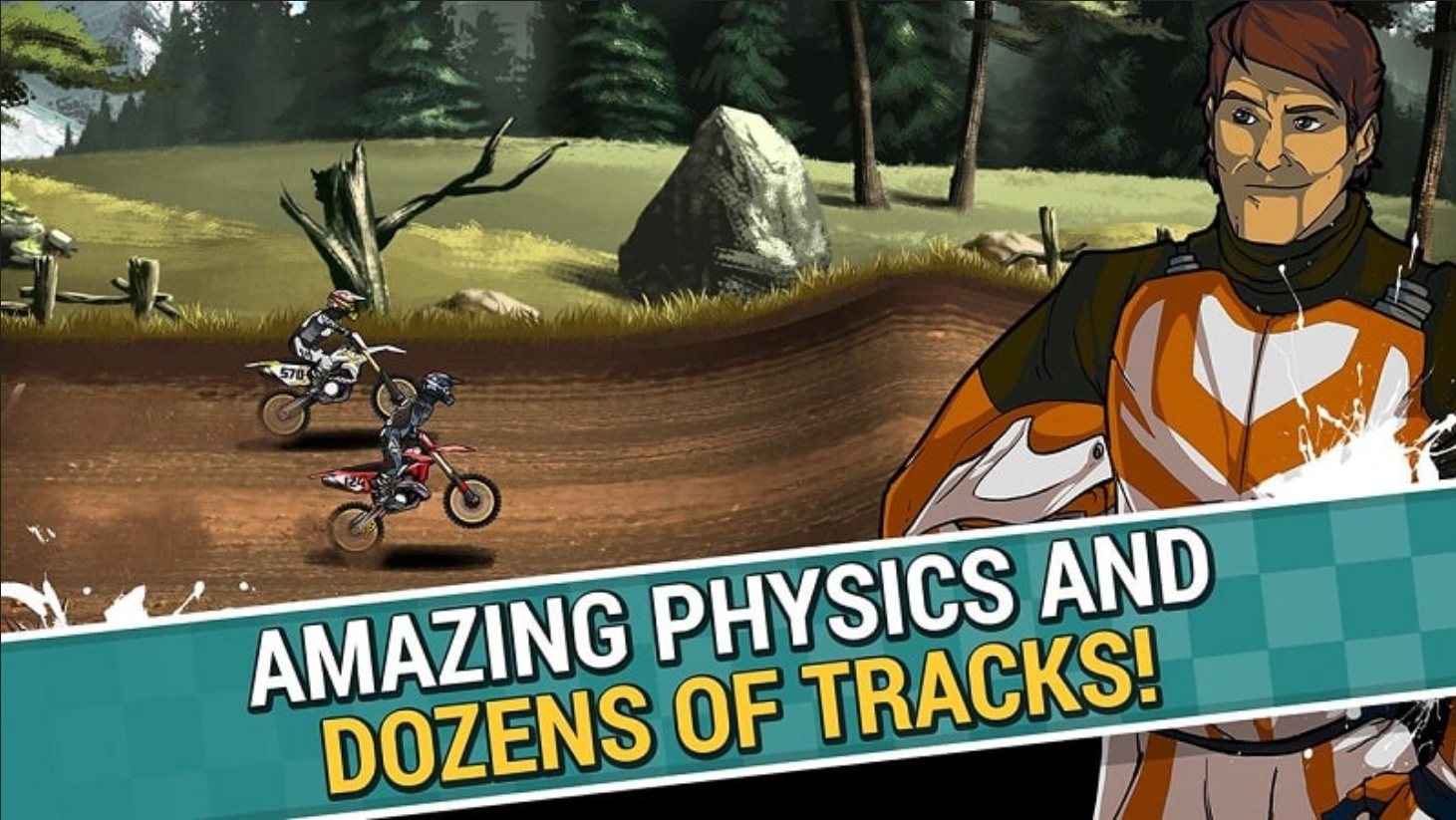
At its heart, this is a racing game, but the way races unfold feels different from typical arcade racers. Tracks are not flat straight lines. They are full of hills, ramps, drops, tight corners, and obstacles that force you to constantly adjust your speed and body position on the bike. Lean too far back on a jump and you will land nose first. Lean too far forward and you risk flipping over the handlebars.
Races usually last under a minute or two, but that short window is intense. Every second counts, and one small mistake can cost you the entire run. I have lost races in the final three seconds because I misjudged a landing after being in first place the whole time. That kind of tension is what keeps players opening the game again and again, chasing a cleaner run than the last one.
Terrain and Track Design
The tracks in this game are designed to feel like real motocross courses rather than smooth digital roads. You will ride through dirt paths, forest trails, rocky hills, and man made ramps, each with its own rhythm. Some sections reward pure speed, while others demand careful throttle control to avoid losing your balance mid air.
What makes the terrain design stand out is how unpredictable it feels even after multiple attempts. A jump that looked easy on your first try might send you flying at a completely different angle the second time if your speed or lean angle was even slightly different. This is not a game where memorizing a track guarantees a win. You still need to react in real time.
New players often underestimate how much terrain affects momentum. Riding uphill drains speed fast, while downhill sections can send you flying if you are not careful with throttle control. Learning to read the shape of the track ahead, rather than reacting after the fact, is one of the biggest skill jumps you will make as you keep playing.
Bike Customization and Why It Matters
Players can customize their bikes with different parts, colors, and gear, and this is not just a cosmetic feature. Certain upgrades affect handling, acceleration, and stability, which changes how your bike behaves on tricky terrain. A bike tuned for speed might struggle with control on rougher tracks, while a more balanced setup could cost you a bit of top speed but save you from crashing on technical sections.
I personally spent a good amount of time experimenting with different setups before settling on a configuration that suited my riding style. If you tend to brake late and take corners aggressively, a bike with better stability will help more than raw speed. If you are more cautious and plan your jumps carefully, a faster bike can help you shave seconds off your time without much added risk.
Customization also lets you personalize your rider and bike visually, which adds a small but satisfying layer of identity to your gameplay, especially if you plan to race against friends or compare runs with other players online.

Multiplayer Racing and Competition
One of the strongest parts of Mad Skills Motocross 2 is its multiplayer mode, where up to twelve riders can compete on the same track at once. This turns the game from a solo time trial experience into a genuine competitive race. Everyone starts with equal footing, but once the race begins, positioning and quick decision making separate the winners from the rest.
Racing against real players adds a different kind of pressure compared to racing against the clock. You have to think about overtaking opportunities, defensive positioning on narrow sections, and how aggressive risks pay off when there are other riders around you who might capitalize on your mistake. I have won races purely because an opponent tried a risky jump too early and crashed, and I have lost the same way more times than I would like to admit.
Difficulty Curve and Learning the Controls
The controls are simple to understand but genuinely hard to master, which is part of why this game has held player interest for so long. You control throttle, brake, and lean, and that is essentially it. But combining these three inputs at the right moments across constantly changing terrain takes real practice.
Early races feel forgiving, almost like a tutorial disguised as gameplay. As you progress, tracks introduce sharper drops, tighter gaps, and sections where a single miscalculated lean can end your run instantly. This gradual difficulty increase keeps the learning curve smooth rather than overwhelming, though there is still a noticeable jump in challenge once you move past the early tracks.
My advice for anyone starting out is to resist the urge to hold full throttle at all times. Slowing down slightly before a jump often gives you better control over your landing angle, which matters far more than raw speed in most sections.
Visual Style and Sound Design
Mad Skills Motocross 2 does not rely on realistic graphics to impress players. The art style is straightforward, almost minimal, but it works well for a game focused on fast reactions and tight controls. Cluttered visuals would actually hurt gameplay here since players need to read the terrain quickly.
The engine sounds and environmental audio add a surprising amount of immersion for a game with such simple visuals. Revving the throttle, hitting rough terrain, and the sound of near misses all contribute to how intense a close race feels, even without flashy animations.
How This Compares to Other Motocross and Racing Games
Compared to more simulation heavy racing games, Mad Skills Motocross 2 leans into arcade style fun while still respecting physics enough to reward skill. If you are someone who enjoys deeper vehicle simulation, you might also want to look into other racing titles that focus more on realistic handling and customization, such as Ultimate Motorcycle Simulator, which takes a different approach with more emphasis on open world riding, or CarX Drift Racing 2, which shifts the focus entirely to car based drifting mechanics rather than motocross racing.
Each of these games scratches a slightly different itch. Mad Skills Motocross 2 stays focused on short, intense, skill based motocross racing, and that focus is exactly why it still holds a strong player base years after release.

Tips for New Players
A few things I wish I knew when I started playing.
Do not panic when you start flipping mid air. Small throttle adjustments can often correct your angle before you land, and overcorrecting usually makes things worse.
Watch the shape of the terrain ahead, not just the obstacle directly in front of you. Many crashes happen because players react to what is immediately visible instead of planning two or three seconds ahead.
Practice specific tracks in single player before jumping into multiplayer races. Knowing the general rhythm of a course, even without memorizing exact jump distances, gives you a real advantage over riders seeing it for the first time.
Do not underestimate braking. New players tend to associate motocross racing purely with speed, but controlled braking before tricky sections often saves more time overall than reckless full throttle riding.
Who This Game Is Really For
If you enjoy games that reward practice and precision over flashy graphics or pay to win mechanics, this is worth your time. It suits players who like short, replayable sessions rather than long story driven experiences. It also works well for competitive players who enjoy comparing times or racing friends directly, thanks to its multiplayer mode.
It may not be the right fit if you are looking for a slow paced, story heavy racing experience or a fully open world riding simulator. This game is built around fast, tight, skill focused races rather than exploration.
Mad Skills Motocross 2 earns its long lasting popularity honestly. It does not rely on gimmicks or oversized vehicle rosters to keep players engaged. Instead, it focuses entirely on getting the core riding experience right, and that decision has paid off for years. Every crash feels like your own mistake rather than bad game design, and every clean run feels genuinely earned.
If you have not tried it yet, go in expecting a learning curve, and do not get discouraged by your first few crashes. Once the controls click, it becomes one of those games that is easy to open for five minutes and somehow still be playing an hour later.
For more official information about the developer and their other titles, you can visit Turborilla’s official website or check the game’s listing on the Google Play Store.